This post features some affiliate links
Today is World Mental Health Day. I’m a big believer in talking about mental health every day of the year, but I appreciate that these awareness days draw attention to causes that may otherwise pass people by, particularly when it comes to recognising symptoms they may not have realised they had, and pointing them in the direction of helpful resources. My own mental health has taken a bit of a dip in the last couple of months and I thought I’d share some books which have really helped me.
I’ve blogged before about my history of depression (short version is I went on anti-depressants at the end of my degree and stayed on them for three years. Longer version here) and I was proud of the fact that I was medication-free for a good five years. I’d learned to prioritise my own wellbeing, slow down when things start to escalate, and ask for help when I need it. Then, a couple of months ago, I read one of Cat’s blog posts and realised that symptoms I’d previously put down to other things (tummy ache even after taking antibiotics for water infections, irritability and mood swings, which I’d blamed on my contraception), were probably early symptoms of anxiety.
I’d been experiencing some dizzy spells when sat down at work, and attributed it to needing to drink more water or grab a snack. Then they started to get worse and I’d get occasional palpitations. I realised that these ‘episodes’ occurred when another email popped up in my inbox adding more tasks to my ever-increasing to do list. Yep, definitely anxiety. I popped to the GP, discussed my symptoms and history, and was given a prescription for Sertraline. I’d taken Fluoxetine before but, now that I had anxiety as well as depression, I needed something different.
I’m pleased to report that the medication has greatly improved my anxiety symptoms, but now that I’m feeling better in that sense, I’m more aware of the underlying depression (irritability, tiredness), so I’ll mention that at my next follow-up appointment. In the meantime, I’ve become a lot better at resting when I need to (lots of early nights), and I’m trying to prioritise doing something fun for myself every day (lettering, grown-up TV, bubble bath, blogging).
But enough about me, let’s get back to those books.

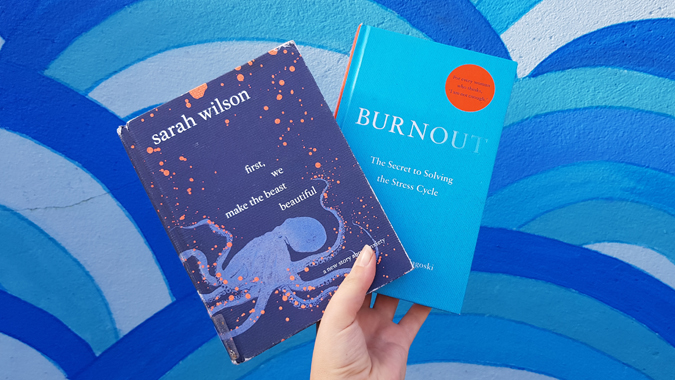
When I spotted First, We Make the Beast Beautiful by Sarah Wilson on @otterly_bookish‘s Instagram account, I immediately added it to my library reservation list. Obviously I was initially attracted by the stunning cover, but, having read some great non-fiction recently, I thought I’d give a book on anxiety a go.
I found it so useful to read about someone else’s experience of anxiety – the ups and downs, the tips and tricks which have helped to manage symptoms, a bit of (accessible) science behind the illness. It was so relatable, reassuring and hopeful; it really helped me to understand myself better and I felt it gave me permission for a lot of things.
It’s such a prevalent condition: “…globally one in thirteen people suffer an anxiety-related illness. Some studies tell us that one in six of us in the West will be afflicted with an anxiety disorder at some stage in our lives, making it the most common officially classified mental illness… There’s no accurate gauge for the number of people who are feeling the frenetic toll of modern life but somehow manage to keep on keeping on without presenting to a doctor…” Hopefully days like World Mental Health Day will help people realise that it’s not ‘normal’ to feel the way they do and that they can take steps to feel better.
I mentioned earlier that my more extreme symptoms of anxiety presented while at work. We’d recently gone through an extremely busy and stressful period, and people had regularly commented on how efficient I was. The reality was that I had been struggling to keep my head above water for months. That’s the problem with high-functioning anxiety: “We are a picture of efficiency and energy, always on the move, always doing… I’d add that, in such instances, we’d love everyone (someone?) to see that we absolutely do not have our shit together. And to come and tell us they’ve got this one. Even for five minutes. The more anxious we are, the more we’d really love someone to come and take the load off us and help us cope for a bit. This presents us with another cruel anxious irony, doesn’t it: the more anxious we are, the more high-functioning we will make ourselves appear, which just encourages the world to lean on us more.”
So how can we ease the anxiety? How can we function better in our day-to-day lives while living with high-functioning anxiety? Self-compassion is key. You might think you don’t have time for self-care and mindfulness but it’s so important. And I’m not talking spa days and bubble baths; I’m talking about things which you can easily build in to your day-to-day: a quiet walk, an early night, actually taking your lunch break away from your desk. Essentially, being kind to yourself. It takes 66 days of continuous work to create a new habit – you can do this!
Just before I’d self-diagnosed my anxiety problem, I’d spent a fair bit of time at the beach with Jenson and realised how much better I felt just walking along the seafront or wading into the sea ankle deep. There’s a reason for this: “Studies show that any movements, but particularly walking, will ease anxiety when were in the middle of a stress hormone surge. Indeed, the studies show that a mere 20-30 minute walk, five times a week, will make people less anxious, as effectively as antidepressants. Even better, the effect is immediate… even getting out into nature for five minutes at a stretch is enough to give your self-esteem a substantial upgrade… walking near water seemed to have the biggest effect.”
There was a reason for my symptoms and an explanation for why I found certain things beneficial. While I know that anxiety and depression are linked to chemical imbalances, and can occur for no reason, if I’m really honest with myself, I think perhaps this has been triggered by Jenson starting school and changes at work. I’m a big planner and like to be in control and these two big parts of my life felt very outside of my control and entirely unpredictable in terms of knowing how things would pan out. When would we get a new CEO? Would they want to restructure? Is my job secure? Will Jenson like school? Will he make new friends? How much time will we still get to spend together? “Thinkers from Darwin to Freud describe anxiety as a grasping forward to fixes that make us feel safer about the unknown ahead of us… Some literature suggests depression is a natural coping mechanism deployed in such cases to stop us from self-combusting from anxiety that’s out of control.”
I’m working on some new coping mechanisms – learning to focus on the present, rather than dwelling on the past or worrying about the future. I think that’s why I like walking by the sea – it’s when I’m most present and mindful. I was also interested in what Sarah had to say about ‘decision fatigue’, so I’m trying to reduce the number of choices I have to make, drop ‘certainty anchors’ and automate as much as I can.
Another thing I’m working on is the magic ratio of ‘life balance’: “Women have got it into their heads that they should be able to do it all. And in perfect balance. And this has resulted in more stress and less happiness… To stay on top of all the ideas and opportunities that Modern Life now affords us we have to keep multiple tabs open in our brains, which sees us toggle back and forth between tasks and commitments and thoughts.” We’re never off, always filling time with smartphones.
At the height of my symptoms, I stopped blogging for three weeks. This was hard for me as it was how I spent the bulk of my work and child-free time. I had loads of ideas, but when I came to sit at my desk, my fingers just hovered over my keyboard and I couldn’t write. So I took the time off. I had early nights or watched TV. And now that I’m trying to get back into my habit of three posts a week, I’m constantly reminding myself that I set my schedule. The world won’t stop if I don’t blog for a few days. It’s important to rest. Which brings me on to the second book which I’ve found really helpful…
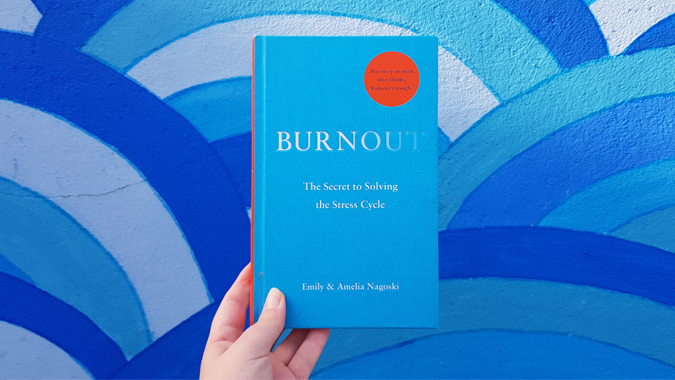
@bycharlotteann_ had good things to say about Burnout: The Secret to Solving the Stress Cycle by Emily and Amelia Nagoski, so I added that to The List too. Don’t you just love finding fantastic recommendations on Bookstagram?
I think a lot of my problem comes from constantly teetering on the edge of burnout. I’m always ‘on’. If I’m not at work, I’m with my son. I very rarely take time away from both things. When I have a day off and Jenson is at school, I start the day with housework and then fit in anything I want to do for myself after that. So when I read the opening of this book, I knew it was for me: “This is a book for any woman who has felt overwhelmed and exhausted by everything she has to do, and yet still worried she was not doing “enough.” Which is every woman we know – including us.”
While I know anxiety and depression don’t just affect women, I know that there are a lot of outside pressure which primarily affect women, and this book has been so useful. It’s reassured me that I’m not alone with my exhausting lifestyle – and that I can take steps to improve this.
I loved that Emily and Amelia acknowledged how ‘trendy’ self-care has become and that it’s unrealistic for a lot of people: “The problem is the world has turned “wellness” into yet another goal everyone “should” strive for, but only people with time and money and nannies and yachts and Oprah’s phone number can actually achieve. So this book is different from anything else you’ll read about burnout. We’ll figure out what wellness can look like in your actual real life, and we’ll confront the barriers that stand between you and your own well-being.”
Everyday actions which I can apply immediately. Just what I need! And it’s not just about time management and productivity. They look at emotional exhaustion too: “most strongly linked to negative impacts on our health, relationships, and work – especially for women”). It turns out I’m suffering from both professional burnout and parental burnout.The working mum life is hard, and it’s a life that so many of us are struggling with: “Exhaustion happens when we get stuck in an emotion… once you’re a parent, you’re never not a parent.”
While there’s some (again, accessible) scientific background in this book, it’s so enlightening. And Emily and Amelia are great at making everything easy to digest. I loved the pop culture references too – Star Wars, The Hunger Games, Karate Kid, Moana, Finding Nemo, Inside Out, Frozen. They have great taste!
I had so many ‘oh em gee, this is me’ moments: “anxiety comes from the accumulation, day after day, of stress that never ends.” And I felt empowered to make positive changes to improve my lifestyle. It helps that I’m very reflective and a bit of a goal-setter: “We thrive when we have a positive goal to move toward, not just a negative state we’re trying to move away from.”
Physical activity is a great way to combat stress but there are other ways too. One of my favourite takeaways was that there are six key strategies to tackling stress: breathing, positive social interaction, laughter, affection (“a twenty-second hug can change your hormones, lower your blood pressure and heart rate, and improve mood“), a big ol’ cry, and creative expression. Blogging, journaling, and lettering are a big part of my routine – I do at least one of these every day.
And that’s the key: “find what works… schedule that stuff into your day… Thirty minutes of anything that works for you… Because you experience stress every day, you have to build completing the cycle into every day. Make it a priority, like your life depends on it. Because it does.”
I’ve learned the importance of planful problem solving and controlling what I can control. Yes, it’s hard when there is a stress in my life which is beyond my control, but refocusing my time and energy on what I can control makes things a bit easier.
They also reiterate the importance of not just sleep, but rest: “mental rest is not idleness; it is the time necessary for your brain to process the world“. But sleep is important too. I’ve noticed that lately I’ve gone from 6-8 hours sleep a night to 9-11. And rather than beating myself up for not being productive, I’m congratulating myself for resting when I need to: “If you struggle with depression, anxiety, or other mental health issues… sleep is medicine for you.”
I can’t recommend these books highly enough if you’re struggling with your mental wellbeing.
Have you got any mental health book recommendations?
Click here to find out more about the World Mental Health Day campaign.
If you’re worried about yourself or a loved one, please contact the Samaritans. They’re available 24/7.
I like the sound of those especially The Secret to solving the stress cycle. I tend to have a lot of goals and tell myself I need to do this and that. Turns out I then fit relaxing in like a chore and you know when you plan to do something it doesn’t feel like you’re relaxing as you might feel like doing something else at the time.
I’ve stopped blogging so much but I also haven’t finished this writing course I started. I’ve had other things I’ve been doing. But it’s OK. I’ve learnt a lot this year about not doing everything. Anxiety is a pain. I don’t really read self help books anymore though although I would consider these. Nothing sticks and I have so many books to read. Sometimes I feel like anxiety has gone but then I realise it hasn’t. I need to feel less guilty for relaxing and give myself a break. Interesting post thanks for sharing.
I can totally relate. Guilt is always a big thing for me. I like to remind myself: “you can do anything but not everything”. Plus, if you’re going to feel guilty no matter what you do, you might as well pick the option which makes you happy ❤
Good advice
I’m so glad to hear that this new medication you are taking is working for you lovely. This book sounds really good, I love books like this x
Lucy | http://www.lucymary.co.uk
❤
I have never heard of these books before. They should so interesting but so helpful! Thank you for sharing these and spreading awareness about mental health xx
Awesome advice and so elaborate, it shows that you are so passionate!!
interesting post
I’ve never heard of either of these two books before, but after reading this post, I’m thinking it might be good for me to read them.
I’m pleased to read that medication is helping you cope. If I could be so nosey, how has it been working since writing this post? is it still serving just as well now?
They’re really good and I found them in the library 🙂 After three months on Sertraline I was still more irritable than I’d like (although dizzy spells and palpitations improved massively – I still get a bit lightheaded when stressed/overwhelmed) and switched to Citalopram two weeks ago. I feel worse in that sense (I’m short-tempered, lacking in motivation, impatient, irritable) but don’t know if I’m still settling in to it. If I still feel like this at my review in two weeks I’m going to ask for a different dose/switch again.
Thank you for sharing. I had some struggles when I finally broke down and admitted I needed medication to help. I went through three types before I found the one I could settle with. The doctors kept telling me ‘It’ll settle down, just hold on’. Admittedly, until the third one, it didn’t settle down. So I like hearing other people’s stories. I appreciate you being so open with me. Thank you <3
No problem, it’s really interesting to hear about your experiences too. It’s just frustrating to have to try something for at least a few weeks to know if it’s helpful before trying something else.